Defense markets remain active. Lockheed Martin leads the sector. Backlogs hit record highs today.
Financial Benchmarks for 2026
Lockheed Martin is scheduled to release its first-quarter earnings on April 23, 2026. Wall Street analysts expect the company to report a profit of $6.73 per share. This figure represents a 7.6 percent decrease compared to the first quarter of 2025.
While the quarterly profit may show a temporary dip, the long-term outlook is positive. Analysts expect the full-year earnings for 2026 to reach $29.93 per share. This would be nearly a 5 percent increase over the previous fiscal year.
The primary driver of this confidence is a record $194 billion backlog. This is the largest pool of unfulfilled orders in the history of the company. It provides a clear view of revenue for the next several years. The stock has outperformed the S&P 500 over the last 52 weeks with a 37.5 percent gain.
The company is currently valued at $143.5 billion. To maintain this growth, Lockheed is investing $3.5 billion into new production capacity and next-generation technology. These investments focus on making the manufacturing process more efficient and increasing the output of high-demand missile systems.
Aeronautics and the F-35 Maturity
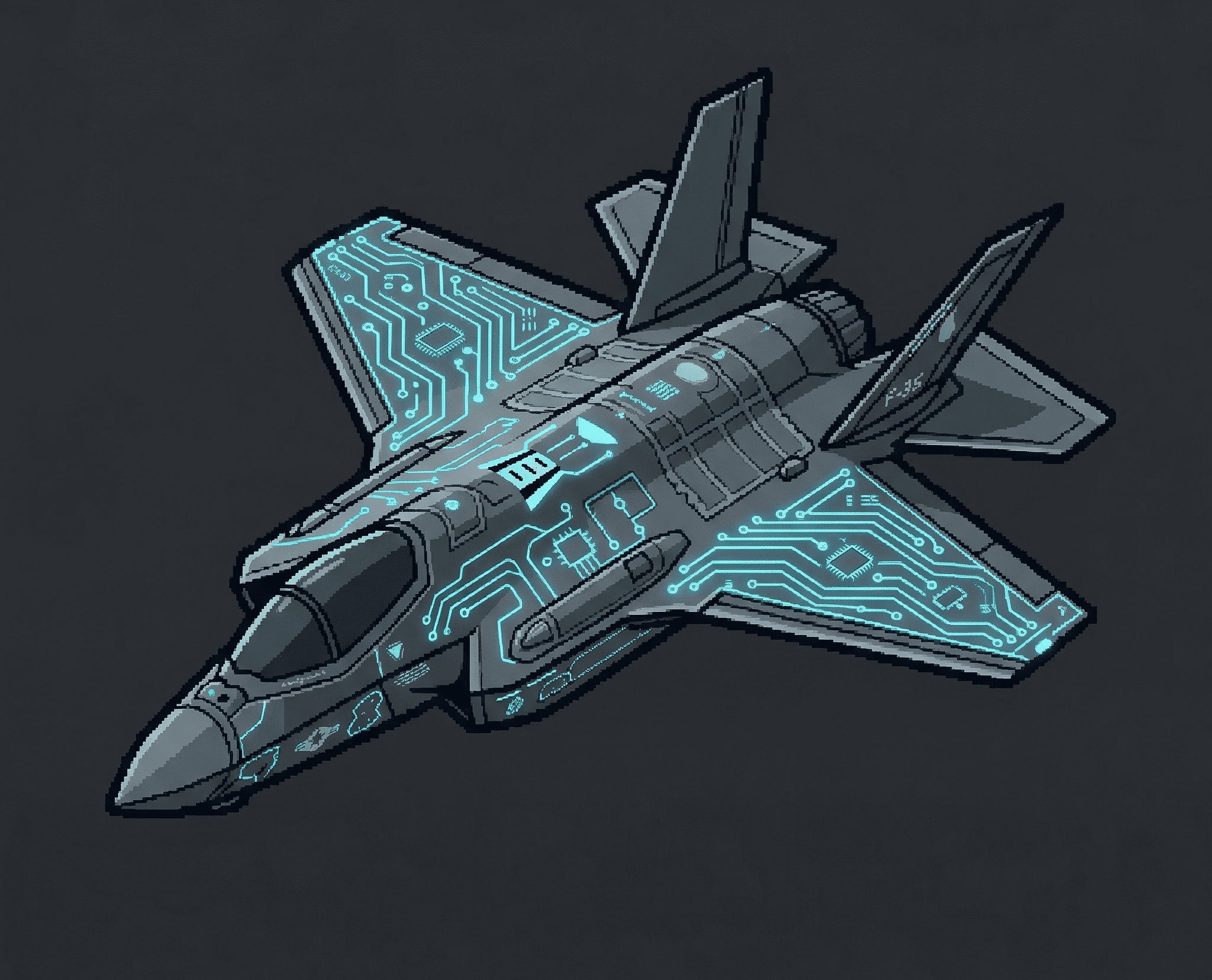
The F-35 Lightning II remains the core of the Aeronautics segment. In 2025, Lockheed delivered a record 191 jets. This high number was necessary to clear the backlog created by software delays in 2023 and 2024.
The program is currently moving through the Technology Refresh 3 (TR-3) phase. This upgrade provides the computer memory and processing power needed for future combat tools.
As of April 2026, the military is using a truncated version of the TR-3 software. This version allows for training missions but does not yet support full combat operations. Full operational testing for TR-3 is expected to conclude in late 2026.
This delay has caused some friction with the U.S. Air Force. Some newer jets may be delivered this year without their primary APG-85 radar systems. These jets will be fitted with weights to maintain balance and will serve in training roles until the hardware is ready.
Despite these technical hurdles, global demand for the F-35 is at an all-time high. Allied nations in Europe and the Pacific continue to place new orders.
The older APG-81 radar remains available for foreign buyers who do not require the latest hardware immediately. Lockheed is currently working to ensure that the transition to Block 4 capabilities remains on schedule for 2027.

Tactical Missiles and Mass Artillery
The Missiles and Fire Control (MFC) unit is seeing the fastest growth in production rates. In April 2026, Lockheed celebrated the delivery of the 750th High Mobility Artillery Rocket System (HIMARS) launcher.
The company has doubled its annual output from 48 launchers to 96 launchers to meet global demand. This expansion is supported by a $2.9 billion contract portfolio.
In addition to the launchers, the production of GMLRS rockets is increasing. These rockets have a range of 92 kilometers and are essential for modern ground combat.
The newer ER GMLRS variant is now entering full operational capability. It extends the strike range to 150 kilometers. Allied nations like Finland and Lithuania have already placed orders for these extended-range rockets.
On March 25, 2026, Lockheed announced it would quadruple the production of the Precision Strike Missile (PrSM). The PrSM is the successor to the ATACMS missile.
It offers a range beyond 499 kilometers and fits two missiles per HIMARS pod. This increase in production is part of a new agreement with the Department of Defense to ensure joint forces maintain a long-range advantage. Much of this work is centralized at the Camden, Arkansas, facility.
Vertical Lift and Autonomy
Sikorsky, a Lockheed Martin company, is navigating a major shift in U.S. Army priorities. The Army recently canceled the Future Attack Reconnaissance Aircraft (FARA) program to save costs.
However, the Army has accelerated the Future Long Range Assault Aircraft (FLRAA) program. This aircraft will replace the Black Hawk helicopter with a faster, long-range tilt-rotor design.
In March 2026, Sikorsky completed successful flight tests of the UH-60MX Black Hawk integrated with the MATRIX autonomy suite. This technology allows the helicopter to fly with a reduced crew or entirely without a pilot.
The MATRIX system is also being used in collaboration with Robinson Helicopter Company for civil and military utility missions. These autonomous systems are designed to handle resupply and cargo delivery in high-risk areas.
Sikorsky is also supporting existing fleets. In early 2026, six major operators renewed their Total Assurance Program contracts for the S-92 helicopter.
This ensures long-term maintenance and parts support for global rotary wing operations.
Space Exploration and Homeland Defense
The Space segment reached a major milestone on April 1, 2026. The Lockheed-built Orion spacecraft launched on the Artemis II mission. This mission sends astronauts around the Moon for the first time in over 50 years. It serves as a critical test of the life support systems and heat shield before the planned lunar landing in 2027.
In terms of defense, the Next Generation Interceptor (NGI) program has moved from the technology phase to product development. The NGI is designed to protect the United States from ballistic missile threats.
It is a “never-fail” system that will be part of the Ground-based Midcourse Defense network. Lockheed is currently building a new dedicated NGI facility to handle the production of these interceptors.
The company is also working with the U.S. Space Force. In March 2026, Lockheed participated in the VICTUS DIEM exercise.
This exercise demonstrated the ability to rapidly process and launch space payloads during a national security crisis. This focus on “tactical space” is a growing priority for the Department of Defense.
Strategic Outlook: The $194 Billion Momentum
Lockheed Martin is entering the middle of 2026 with strong momentum. The company has successfully cleared its delivery backlogs and is now focused on high-rate production.
While technical delays in the F-35 program remain a point of concern, the expansion of the missile and space segments provides a balanced revenue stream.
The record backlog of $194 billion ensures that the company will remain the dominant player in the defense industry for the remainder of the decade.
Investors should watch for the official earnings call on April 23 for more details.
I hope this expanded report helps you understand the current trajectory of the company. It is a busy year for defense production and space flight.
Check out the Lockheed Martin Investor Relations portal for the full earnings webcast.
In some cases, you may want to begin working on some automations. We offer help with both automations and readiness. Just contact us at info@cirrusautomations.com.
Data Sources:
- Earnings/Financials: Barchart report (April 6, 2026).
- F-35 TR-3 Status: Defense News (January 15, 2026) and DOT&E updates.
- HIMARS/GMLRS: Space & Defense News (April 4, 2026) regarding the 750th delivery.
- PrSM Production: Lockheed Martin Official Press Release (March 25, 2026).
- Artemis II/Orion: Lockheed Martin Newsroom (April 1, 2026).
- FLRAA/MATRIX: Sikorsky Program Updates (March 23, 2026).